
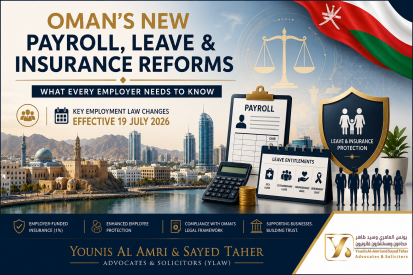
Oman's New Payroll, Leave & Insurance Reforms: What Every Employer Needs to Know
A New Era of Employment Protection in Oman
The Sultanate of Oman has taken another significant step towards modernizing its employment and social security framework by implementing the Sick Leave and Extraordinary Leave Insurance Branch under the Social Protection Law, effective 19 July 2026.
These reforms are part of the Government's broader strategy to establish a comprehensive and sustainable social protection system that aligns with Oman Vision 2040, while enhancing employee welfare and promoting a resilient labour market.
For employers, however, these changes extend beyond employee benefits. They introduce new payroll obligations, compliance requirements, and administrative responsibilities that demand immediate attention.
This article examines the legal framework, the practical implications for businesses, and the key actions employers should take to remain compliant.
The Legislative Framework
The reforms are principally governed by:
- Royal Decree No. 52/2023 promulgating the Social Protection Law;
- Royal Decree No. 60/2025, postponing the implementation of the Sick Leave and Extraordinary Leave Insurance Branch until 19 July 2026;
- Royal Decree No. 53/2023 promulgating the Labour Law;
- Decisions and implementing regulations issued by the Social Protection Fund (SPF).
Together, these legislative instruments form part of Oman's transition from the traditional pension model to an integrated social protection framework covering pensions, insurance, leave benefits and income protection.
What Has Changed?
The latest reforms introduce a dedicated insurance branch covering:
- Sick Leave Benefits
- Extraordinary Leave Benefits
Unlike previous arrangements in which employers bore the full financial burden of extended employee absences, the new insurance mechanism introduces a structured reimbursement model administered by the Social Protection Fund.
Employer Contributions
One of the most important changes concerns employer payroll obligations.
From 19 July 2026, employers are required to contribute:
1% of the employee's contribution wage towards the Sick Leave and Extraordinary Leave Insurance Branch.
Key Points
✔ Fully funded by the employer
✔ No additional employee contribution
✔ Mandatory payroll deduction reporting
✔ Contributions payable through the Social Protection Fund system
Employers should immediately review payroll software and contribution calculations to ensure compliance.
New Sick Leave Insurance
The insurance scheme provides wage replacement during prolonged illness, reducing the financial burden previously carried entirely by employers.
The benefit structure is as follows:
|
Period |
Benefit |
|
First 7 days |
Employer responsibility |
|
Days 8–21 |
100% of wage |
|
Days 22–35 |
75% of wage |
|
Days 36–70 |
50% of wage |
|
Days 71–182 |
35% of wage |
The maximum annual entitlement is 182 days.
Employers should note that medical certification and compliance with the procedures prescribed by the Social Protection Fund remain essential.
Extraordinary Leave Insurance
The reforms also extend financial protection to several categories of extraordinary leave, including eligible circumstances such as:
- Marriage Leave
- Bereavement Leave
- Compassionate Leave
- Leave accompanying a family member for medical treatment
- Widow's Mourning Leave
The specific eligibility requirements and reimbursement mechanisms are governed by the implementing regulations issued by the Social Protection Fund.
Expansion of Coverage
Another significant development is the extension of compulsory insurance coverage to specified categories of expatriate employees working in Oman.
This reflects the Government's objective of creating a more comprehensive and inclusive social protection system across both the public and private sectors.
Employers with multinational workforces should carefully review whether their expatriate employees fall within the scope of the new requirements.
Payroll Compliance: More Than a System Update
The reforms require more than simply adjusting payroll percentages.
Employers should undertake a comprehensive compliance review covering:
Payroll Systems
- Update payroll software
- Apply new employer contribution rates
- Ensure accurate reporting to the Social Protection Fund
Employment Contracts
Review employment agreements to ensure consistency with the new legislative framework.
Employee Handbooks
Leave policies should be revised to reflect the new insurance arrangements, reimbursement procedures and employee entitlements.
HR Procedures
Internal HR teams should receive training regarding:
- medical certification;
- reimbursement claims;
- reporting obligations;
- documentation requirements.
Why These Reforms Matter
The reforms demonstrate Oman's continuing commitment to:
- strengthening employee welfare;
- improving workforce stability;
- encouraging private sector employment;
- aligning employment legislation with international best practices;
- supporting sustainable economic development under Oman Vision 2040.
For employers, compliance is no longer simply a statutory obligation—it is an important element of corporate governance and risk management.
Recommended Actions for Employers
Businesses should consider taking the following steps without delay:
✓ Review payroll contribution calculations.
✓ Audit HR and payroll systems.
✓ Update leave policies.
✓ Review employment contracts.
✓ Train HR and finance teams.
✓ Ensure timely registration and reporting with the Social Protection Fund.
✓ Seek legal advice where existing employment arrangements require amendment.
How YLAW Can Assist
At Younis Al Amri & Sayed Taher Advocates & Solicitors (YLAW), we regularly advise multinational corporations, financial institutions, government entities and private businesses on employment law compliance and workforce restructuring.
Our Employment & Labor Practice provides comprehensive support, including:
- Employment law compliance audits
- Payroll and Social Protection compliance reviews
- Drafting and updating employment contracts
- HR policy reviews
- Regulatory advisory
- Employment dispute resolution
Whether you are reviewing your payroll framework or assessing the impact of the latest legislative reforms, our team is well positioned to help your organisation navigate these changes with confidence.
Conclusion
The implementation of the Sick Leave and Extraordinary Leave Insurance Branch marks another milestone in the evolution of Oman's employment law landscape. While the reforms strengthen social protection for employees, they also introduce new compliance obligations that require careful planning and timely implementation by employers.
Organisations that proactively review their payroll systems, employment documentation and HR policies will be better placed to ensure compliance, minimise operational risk and adapt to the evolving regulatory environment.
Disclaimer: This publication is intended for general informational purposes only and does not constitute legal advice. Specific legal advice should be obtained based on the facts and circumstances of each case